


The Faculty of Science and Technology at The University of the West Indies (The UWI), Mona, officially launched the Water, Analytics, Tracing and Environmental Research (W.A.T.E.R.) Laboratory on June 5, 2026, in the Department of Chemistry which coincides with World Environment Day. The establishment of the laboratory represents a significant investment in interdisciplinary research aimed at improving the understanding, monitoring and sustainable management of freshwater, coastal and marine environments in Jamaica and the wider Caribbean.
The W.A.T.E.R. Laboratory is headed by Dr. Debbie-Ann Gordon-Smith, Lecturer in the Department of Chemistry, who also serves as its Research Lead. Her grantsmanship, research leadership and development of strategic partnerships were instrumental in securing the resources and institutional support required to establish the facility. Dr. Gordon-Smith’s research interests include water chemistry and pollution, coral reefs, ocean acidification, groundwater–surface water interactions, the use of radioactive and stable isotope tracers, and climate change. These areas of expertise guide the laboratory’s scientific direction and its efforts to address some of the Caribbean’s most pressing water and environmental challenges.
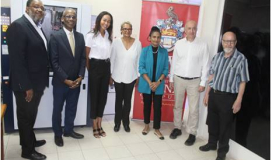
The launch was attended by senior University representatives, researchers and key external stakeholders, including Dr. Donna Minott Kates, (then) Head of the Department of Chemistry; Professor Michael Taylor, (then) Dean of the Faculty of Science and Technology; Professor Marvin Reid, Deputy Principal of The UWI Mona; and Mr. Geoffrey Marshall, Deputy Managing Director of the Water Resources Authority. Also in attendance was Dr. Anthony Greenaway, Dr. Gordon-Smith’s graduate research supervisor, whose research interests span environmental pollution and industrial chemistry. His presence highlighted the importance of academic mentorship and the contribution of established researchers to the development of the next generation of Caribbean scientists.
The mission of the W.A.T.E.R. Laboratory is to generate high-quality scientific knowledge that supports the sustainable management of aquatic environments across Jamaica and the Caribbean.
Its research places particular emphasis on understanding biogeochemical processes, ecosystem health and the ways in which freshwater, coastal and marine environments respond to natural and human-induced pressures. Through field-based observations, laboratory analyses and regional monitoring initiatives, the laboratory will strengthen scientific capacity, support evidence-based policy and management decisions, and contribute to regional and global discussions on water and ocean sustainability.
Water pollution chemistry is a core research area of the laboratory. Its work examines nutrient dynamics, isotopic tracers, climate impacts and other environmental drivers of change within aquatic ecosystems.
Researchers at the laboratory use radioactive and stable isotope techniques to trace biogeochemical pathways, identify sources of nutrients and pollution, and examine the connections among groundwater, rivers, estuaries and marine environments. Coastal research focuses on the effects of land-based pollution and other environmental pressures on Jamaica’s vulnerable coral reef and mangrove ecosystems. The laboratory also conducts analyses of marine sediments to investigate historical geochemical processes and the long-term effects of climate change. Ocean acidification is another key and expanding area of research. This work includes assessments of carbonate chemistry, the monitoring of ocean-observing capacity, and the evaluation of ecological and biogeochemical responses to changing ocean conditions.
The laboratory is also conducting detailed assessments of major freshwater systems, including the Rio Cobre, Rio Grande and Black River. These studies examine hydrology, water chemistry, pollution, land–water interactions and the movement of water between groundwater and surface-water systems.
Collectively, these research areas support a more integrated understanding of how Caribbean aquatic environments are being affected by pollution, climate change and other natural and human-induced pressures.
The official opening also included a guided tour of the W.A.T.E.R. Laboratory, facilitated by two of Dr. Gordon-Smith’s research students, Mr. Andrew Green and Ms. Pearl Bergan.
During the tour, guests were introduced to the laboratory’s research facilities, equipment and analytical capabilities. The students also provided insight into the scientific techniques used to examine water quality, environmental pollution, aquatic chemistry and the movement of chemical and isotopic tracers through freshwater, coastal and marine systems. The tour provided attendees with an opportunity to see firsthand how the laboratory will support field-based research, laboratory analyses, student training and collaborative environmental monitoring initiatives.
In addition to advancing scientific research, the W.A.T.E.R. Laboratory provides an important platform for graduate training, undergraduate research and international scientific engagement.
The laboratory currently supports three locally based postgraduate students—Ms. Pearl Bergan, Mr. Andrew Green and Mr. Kadane Coates—as well as undergraduate students and international researchers.
Students are actively involved in fieldwork, laboratory analyses, data interpretation and collaborative research projects. Their participation contributes to local and international scientific outputs while building the technical expertise needed to address emerging environmental challenges.
The involvement of Mr. Green and Ms. Bergan in facilitating the laboratory tour also demonstrated the central role students will play in the laboratory’s research, public engagement and knowledge-sharing activities.
The W.A.T.E.R. Laboratory maintains strong local, regional and international partnerships that expand its research capacity and scientific reach. Local collaborators include the Water Resources Authority, the National Irrigation Commission and several non-governmental organisations. International partners include The University of Texas at Austin and the Georgia Institute of Technology in the United States; the Leibniz Centre for Tropical Marine Research in Germany; and Liverpool John Moores University, University College London, and the Centre for Environment, Fisheries and Aquaculture Science in the United Kingdom. These partnerships support knowledge exchange, capacity building, student development, shared research methodologies and comparative studies across diverse aquatic environments.
Through its research, training and partnerships, the W.A.T.E.R. Laboratory is positioned to become an important centre for aquatic and environmental research in the Caribbean. Its establishment further strengthens the Department of Chemistry and the Faculty of Science and Technology’s contribution to addressing some of the region’s most urgent water, climate and environmental challenges.
Published on 05 Aug, 2026

Marvadeen Singh-Wilmot joins RSC Advances as an Associate Editor
31 Jul 2026
By Isobel Darlington, Assistant Editor.
We are delighted to welcome Dr Marvadeen Singh-Wilmot, University of the West Indies, Jamaica, as an Associate Editor!
Marvadeen Singh-Wilmot is a Senior Lecturer in the Department of Chemistry at The University of the West Indies (UWI), Mona, Jamaica, and the founder and Head of crXstal, the Caribbean Regional X-ray Science Toward Advancement Laboratory, the only single-crystal X-ray diffraction hub in the English-speaking Caribbean. She obtained her PhD in lanthanide chemistry from UWI Mona in 2003, following a BSc in Pure and Applied Chemistry from the same institution.
Her current research focuses on establishing a systematic structure–property framework for lanthanide coordination polymers (CPs) and metal–organic frameworks (MOFs), showing how lanthanide-ion size, linker design, supramolecular interactions (including halogen bonds) and synthetic conditions govern CP/MOF architecture and optical behaviour. Her group has designed, synthesised and structurally authenticated an extensive library of lanthanide CPs and framework materials across various ligand families, spanning the complete lanthanide series (La–Lu), all deposited in the Cambridge Structural Database (CSD). In recognition of this contribution, Dr. Singh-Wilmot was designated a “CSD Champion” in 2025. Members of the library act as selective luminescent sensors for Fe³⁺, Cu²⁺ and nitroaromatic compounds with further testing on the way to explore their gas adsorption and storage capacity, and modify and screen them for anticancer activity. The library is also being currently expanded to include mixed ligand CPs and MOFs as well ligands that undergo photoisomerization for use as molecular switches.
Dr. Singh-Wilmot has made extensive contributions to research capacity building in the Caribbean, establishing crXstal as a regional platform for diffraction-based structural characterisation and crystallographic training. She is the co-founder and coordinator of the Caribbean Crystallography School and a member of the Executive Committee of the Greater Caribbean Light Source, an initiative to establish a synchrotron light source for the region. In 2010 she was inducted as a Young Affiliate Fellow of The World Academy of Sciences (TWAS), and in 2023 she was elected Fellow of the Caribbean Academy of Sciences (CAS). She is also a member of the International Science Council’s Global Roster of Experts, one of the co-authors of IUPAC’s Guiding Principles for the Responsible Practice of Chemistry, and a former member of IUPAC’s Committee on Ethics, Diversity, Equity and Inclusion (CEDEI).
Research areas
Inorganic Chemistry, including:
Coordination chemistry and crystal engineering
Metal–organic frameworks and coordination polymers
Lanthanide chemistry and luminescence
Luminescent sensing
Functional and materials chemistry
X-ray crystallography and diffraction
Discover some of Marvadeen’s publications:
Responsible chemistry for a changing world: IUPAC’s guiding principles
J. Garcia-Martinez, Peter G. Mahaffy, Mark C. Cesa, Mei-Hung Chiu, Jonathan E. Forman, Mary J. Garson, Richard M. Hartshorn, Tanja Junkers, Leah McEwen, Akiko Nakamura, Daniel O. Reddy, Marvadeen A. Singh-Wilmot, Christine M. Straut Langlinais, Supawan Tantayanon and Rylee E. Van’t Land
Chem. Sci., 2026, 17, 10804–10812
New lanthanide coordination polymers (Ln-CPs) from 2-hydroxyterephthalate: Excited-state intramolecular proton transfer (ESIPT) and sensing capabilities
Marvadeen A. Singh-Wilmot*, Jermaine A. Smith, Zeyar Min, Christopher H. Hossack, Elizabeth A. Decoteau, Christopher L. Cahill and Peter N. Nelson
Polyhedron, 2026, 294, 118160
Expanding the Library: Twenty New Ln(III) Metal–Organic Frameworks, Including Two Isoreticular Pairs, from Dihaloterephthalic Acid
Jermaine A. Smith, Marvadeen A. Singh-Wilmot*, Christopher H. Hossack; Christopher L. Cahill and Risan A. C. Ford
Cryst. Growth Des., 2024, 24, 7822–7836
Supramolecular assembly of lanthanide-2,3,5,6-tetrafluoroterephthalic acid coordination polymers via fluorine⋯fluorine interactions: a platform for luminescent detection of Fe3+ and nitroaromatic compounds
Jermaine A. Smith, Marvadeen A. Singh-Wilmot*, Korey P. Carter, Christopher L. Cahill and J. August Ridenour
New J. Chem., 2020, 44, 12317–12330
RSC Advances Royal Society of Chemistry

Dr Andrea Goldson-Barnaby, Senior Lecturer in the Department of Chemistry, Faculty of Science and Technology at The University of the West Indies (UWI), Mona, has been appointed Secretary of CAS, the Caribbean Academy of Sciences following her election at the 24th Biennial Conference and CAS Executive Meeting, held in Barbados in 2025. Her appointment reflects the confidence placed in her leadership and her long-standing contributions to scientific development and regional collaboration.
The CAS Biennial Conference brought together scientists, researchers, and academic leaders from across the Caribbean to address priority scientific issues, strengthen regional partnerships, and shape the future direction of the Academy. In her role as Secretary, Dr Goldson-Barnaby will play a central role in supporting the governance, coordination, and strategic activities of the organisation.
Dr Goldson-Barnaby’s leadership has also been recognised through her recent appointment as a Fellow, an honour that acknowledges her sustained contributions to science, mentorship, and capacity building within the Caribbean scientific community.
In addition to her election to the CAS Executive, Dr Goldson-Barnaby recently represented Jamaica at the 3rd ACS LATAM+C (Latin America and the Caribbean) Meeting for ACS Faculty Advisors, held in Lima, Peru, from November 21–24, 2025. The meeting brought together participants from Jamaica, Trinidad and Tobago, Costa Rica, Peru, Ecuador, Brazil, Mexico, Chile, Colombia, and the United States, and focused on strengthening collaboration among ACS student chapters across the region, as well as highlighting funding opportunities available through the American Chemical Society.
Through her service to regional scientific organisations and active engagement in international forums, Dr Andrea Goldson-Barnaby continues to make a meaningful contribution to the advancement of science in the Caribbean and beyond.

On September 30, 2025 the Water Chemistry Laboratory welcomed two distinguished visitors: Ms. Carla Cueva, the newly appointed Programme Management Officer in the Technical Cooperation Division of the International Atomic Energy Agency (IAEA), and Ms. Lisa Sinclair from the Planning Institute of Jamaica (PIOJ).
The visit served as an important opportunity to review the impact of IAEA-donated equipment and to discuss the ongoing and future work of the laboratory. Discussions were held with Dr. Debbie-Ann Gordon-Smith, who provided an overview of how the IAEA’s support has significantly enhanced the lab’s capacity to conduct critical water quality assessments and contribute to national and regional research. Also present during the visit were Mr. Andrew Green and Mr. Daniel Gillings, both of whom are actively engaged in the execution of ongoing water quality and monitoring projects. Their presence helped illustrate the hands-on application of the IAEA-supported equipment in real-world environmental challenges.
This visit highlighted the vital role of international partnerships in building local scientific capacity and advancing Jamaica’s national development goals in water resource management. The Department is grateful for the continued support of the IAEA and PIOJ and remains committed to leveraging these collaborations to address pressing environmental issues

The Faculty of Science and Technology (FST) extends heartfelt gratitude to the Students’ Loan Bureau (SLB) for their timely and impactful support in the wake of Hurricane Melissa. In an effort to assist students affected by the storm, the SLB generously provided care packages filled with essential items, offering much-needed relief during a challenging period.
The distribution of the care packages was thoughtfully coordinated by Dr Gallimore, Associate Dean for Student Experience, whose dedication ensured that assistance quickly reached the students who needed it most. We also acknowledge Ms. Yvette Hendrick from the Students’ Loan Bureau, whose leadership and organisation made this partnership possible.
This collaborative effort highlights the strength of community, compassion, and shared purpose. FST deeply appreciates the continued partnership with the SLB, and we remain committed to supporting our students as recovery efforts continue.

Chemistry Honours Society Recognizes Outstanding Students for Academic Year 2024–2025
The Chemistry Honours Society (CHS) in the Department of Chemistry, Faculty of Science and Technology at The University of the West Indies (The UWI Mona), hosted its annual Awards and Induction Ceremony on October 2, 2025, celebrating students who demonstrated exceptional academic performance in Chemistry during the 2024–2025 academic year.
Established in 2014, the CHS was created to recognize and inspire excellence among Chemistry students. The Society encourages its members to strive for distinction, with the ultimate goal of graduating with First Class or Upper Second Class Honours. Eligibility for induction requires students to maintain a strong semester GPA and achieve A– grades or higher in at least nine (9) credits of Chemistry courses.
Membership within the Society is ranked based on the number of times a student has been inducted:
CHS Inductees for Academic Year 2024–2025
Preliminary Awardees: The top three students in Preliminary Chemistry (CHEM0901 and CHEM0902) who earned A– or higher and continued to pursue Chemistry:
Introductory (Level I) Awardees: The top performers in Level I Chemistry (CHEM1810, 1811, 1820, 1910, 1911, 1920) with A– or higher who continued in the field:
Advanced Awardees (Semester 1): Students achieving a GPA of 3.40 or higher, earning A– or above in at least nine (9) credits of Advanced Chemistry (with a minimum of six lecture-based credits) and maintaining a clean record with no failed Chemistry courses were honoured as follows:
Bronze
Silver
Gold
Silver
Gold
Diamond
The Faculty extends congratulations to all awardees and wishes them all the best.
Photo caption: Chemistry Honours Society Inductees for the 2024-2025 academic year.
Published on 06 Nov, 2025
(L-R): Professor Michael Taylor, Dean, Faculty of Science and Technology (FST), The UWI Mona; Dr. Tomlin Paul, Deputy Principal, The UWI Mona; Ms. Kellon Williams, Marketing Manager, Juici Patties; Dr. Donna Minott Kates, Head, Department of Chemistry, FST, The UWI Mona; Dr. Marvadeen Singh-Wilmot, Lead Scientist and Founder of CrXstal and Senior Lecturer, Department of Chemistry, The UWI Mona; Professor Michele Zema, Representative, LAAAMP and Co-founder, CrXstal and Professor Emeritus Robert Lancashire, Department of Chemistry, The UWI Mona.
The University of the West Indies (The UWI), Mona Campus, celebrated a significant milestone on October 3, 2024, with the launch of the crXstal Caribbean Regional X-ray Science Toward Advancement Laboratory and the commissioning of the state-of-the-art Bruker D8 Quest Eco Single Crystal Diffractometer (SC-XRD). This premier research facility, equipped with advanced X-ray diffraction technology, marks a groundbreaking achievement for the English-speaking Caribbean. The SC-XRD enables researchers to "see" atoms and determine 3D structures at the atomic and molecular level, revolutionizing scientific research in the region.
Our 7 faculties and 12 professional schools offer more than 200 programmes to some 18,000 graduate, undergraduate and continuing studies students.
The UWI, Mona ranks first in Jamaica among accredited tertiary-level programmes. In 2012, the University was again one of Jamaica’s Top 100 Employers.
© Copyright 2014-2026 | Disclaimer | Privacy Statement