


Synchrotrons, also called light sources or particle accelerators, are circular rings, approximately 1 km in circumference, that produce light more than ten billion times more intense than the sun.
The light is produced when very high-energy particles called electrons are accelerated and made to change direction by powerful electromagnets arranged around the ring. If you have ever watched the TV series/movie, “The Flash” and seen the circular building at “S.T.A. R. Labs” then you know what a particle accelerator like a synchrotron looks like.
However, this is no Sci-Fi! Synchrotrons are real with over 50 at different stages of operation and/or construction worldwide! But instead of creating speedsters, synchrotrons create extremely powerful light that scientists are using to explore the world and develop new technologies to revolutionise all areas, from history and anthropology to health, energy and the environment. Whether natural or artificial, biological or chemical, solid or liquid, atomic or macromolecular, living or non-living, all types of materials can be studied using synchrotron light. Crucially, much of the information gained cannot be acquired by any other means.
For example, effective COVID-19 vaccines were developed in record time during the pandemic, due to high-precision data collection made possible at synchrotrons. With powerful X-rays, the 3D structure of the SARS-CoV-2 virus was determined.
This revealed the precise bite size and shape of the active sites of the viral proteins, which is crucial in the development of vaccines since the chemical structure of the vaccine must feature components that fit into the virus’ active site, like a key fitting into a lock to block the processes the virus uses to multiply and spread.
Parallel studies with insecticidal proteins at SLAC National Accelerator have revealed new pathways in the battle against mosquito-borne diseases like dengue and zika. Beyond biomedical breakthroughs, another life-changing discovery was made by SLAC scientists who used synchrotron light to show that water can stay liquid even at temperatures below its freezing point when placed on a special crystal surface.
This surprising finding challenges old ideas about water and empowers scientists to control its behaviour from the molecular level. Such precise control over matter is a key pillar of the third industrial revolution and is bridging the transition into the fourth industrial revolution, where advanced technologies like nanotechnology and smart materials are driving innovation and this example demonstrates the importance of basic scientific knowledge to this process.
A simple breakthrough in the understanding of the fundamental nature of water could lead to the development of intelligent water systems, high-efficiency cooling technologies, and next-generation water filters—critical solutions in a world increasingly shaped by data, automation, and sustainability. Indeed this kind of work has all the features of “big science,” driving the development of new technologies by focusing on both fundamental and applied research, needing support from both local and international governments/organisations and broad-scale collaboration among teams of experts.

Countries like China and the USA have long recognised the importance of synchrotrons for driving “big science” projects and this is demonstrated by the number of accelerators they have built; approximately twenty combined. Chinese and American success in developing advanced materials and other technologies is therefore not surprising and their global economic dominance is strongly reinforced by this. It is also not surprising that Africa, where countries rank among the lowest on the global innovation index, is the only continent in the world without a synchrotron.
Jamaica is 79 out of 133 countries on this index, which is very low, but there is some indication that this is about to change as Jamaica now acknowledges the inextricable link between science and development. Prime Minister, Dr. Andrew Holness, is an avowed advocate for STEM advancement and has declared STEM a national priority for Jamaica. He has followed the talk with some action in the appointment of a scientist, Prof Dale Webber, as special envoy for climate change, the launch of small grants for HEART STEM graduates and the investment of $400 million in STEAM labs in technical high schools.
However, for Jamaica to realise its dream of becoming a STEM island, these interventions must be supported by investment in 1) human capacity building with mentorship up to the doctoral (PhD) level 2) physical infrastructure for research and innovation in universities and national research facilities, and 3) strategic local & international partnerships. These are the key pillars of Jamaica’s National Science and Technology Policy which describes the crumbling/non-existent research infrastructure as a challenge which “limits scientists’ and innovators’ potential for scientific and technological advancements/breakthroughs.”
It is precisely this lack of advanced research infrastructure that synchrotron-enabled science can address, offering Jamaica a direct pathway from science policy to impact through high-level, multi-sector and multi-national collaboration. A pathway that will translate into tangible national benefits. Just imagine the economic and social gains from optimizing the coffee industry by using synchrotron techniques in mapping how roasting transforms bean microstructure to perfect flavour or tackling bauxite red mud waste economics with atomic-scale insights. Critically, synchrotron-enabled science underpins disaster risk management, for example by enabling evidence-based assessment of hurricane-driven infrastructure degradation, flood-related contamination, and soil or sediment instability. The urgency of the latter has been brought into sharp focus in Jamaica by the recent devastation caused by Hurricane Melissa. Given the proven record and potential to boost research, resilience and development, why doesn’t Jamaica join the synchrotron community? The good news is, we have!
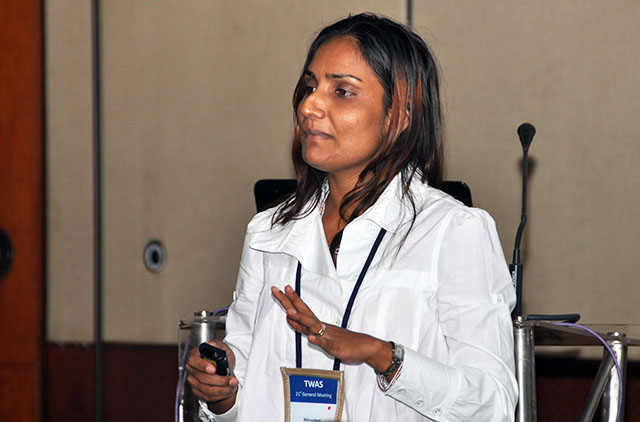
Consistent with the strategic goals of the UWI, the Mona Campus has taken initial steps to lead Jamaica and the region in introducing and exploiting synchrotron technology. The Department of Chemistry has been serving the Executive Committee for the Greater Caribbean Light Source/LAMISTAD, https://caribbeanlightsource.org/, a project to develop synchrotron sciences and ultimately build a light source in the Greater Caribbean Region.
An online survey to evaluate synchrotron awareness, usage and interest among university and industry researchers/technicians, postgraduate and undergraduate students and high school teachers across ten Latin American and Caribbean countries was revealing. Sixty-seven per cent (67%) of Jamaican respondents had never before heard of a synchrotron, and to date, only two Jamaican scientists who live in Jamaica have ever used one. However, 85% Jamaican respondents expressed a strong interest in training, including workshops, seminars and visits, to learn and use synchrotron techniques.
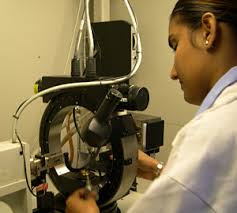
In October 2024, UWI’s Department of Chemistry launched the Caribbean Regional X-ray Science Toward Advancement Laboratory (crXstal), the first and only X-ray diffraction hub in the English-speaking Caribbean (https://www.mona.uwi.edu/news/uwi-launches-cutting-edge-crxstal-laboratory-revolutionizing-caribbean-research).
Established through a targeted resource-mobilisation campaign, crXstal attracted support from over ten donors, including UWI-Mona, UWI-Cave Hill, UNESCO, Light Sources for Africa, the Americas, Asia, the Middle East and the Pacific (LAAAMP), the Caribbean Academy of Sciences (Jamaica Chapter), the Royal Society of Chemistry, the International Science Council, Juici Patties, and individual contributors.
The facility serves as a stepping-stone to deeper engagement in global synchrotron science and has positioned Jamaica to collaborate with established facilities such as the National Synchrotron Light Source II (NSLS-II) in the United States, as well as through LAAAMP-supported Faculty and Student (FAST) Team visits.
From June 2–7, 2025, crXstal hosted its first regional capacity-building initiative, the Caribbean Crystallography School (CCS), training over 25 scientists and university students, including 13 from Jamaica, in X-ray diffraction techniques under the guidance of local and international experts (https://www.mona.uwi.edu/fpas/inaugural-caribbean-crystallography-school).
The school was co-organised by UWI-Mona and LAAAMP, in partnership with Bruker AXS and the CCDC, and was principally supported by the International Atomic Energy Agency (IAEA), with additional support from Juici Beef Limited, the IUCr, ACA, AIC, ICDD, the RSC, the UNESCO Office for the Caribbean, the University of Bologna Global South Programme, ISC-RFPLAC, and LearnSci. Building on this momentum, two UWI chemistry students subsequently undertook two months of advanced materials chemistry research in X-ray diffraction at the University of Bologna through a Global South partnership.
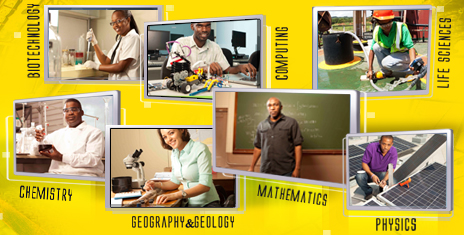
Jamaica must multiply initiatives like these so that it can increase the familiarity of scientists, students and teachers with powerful, next-generation science tools like synchrotrons and reduce the gap between curiosity and capacity. We can begin this process by endorsing national involvement in regional and global planning for synchrotron access, strengthening crXstal as a regional hub and adopting the crXstal funding model to build an island wide network of research facilities, leveraging science diplomacy to attract investment in training and technology partnerships and adding its voice, especially within the Commonwealth and UNESCO frameworks, to support the building of a Greater Caribbean Light Source. This is a sure pathway to educate, train and retain a globally competitive STEM/STEAM workforce and give them access to the cutting-edge tools needed to develop and execute high-impact projects that drive innovation and sustainable development.
Published on 19 Jan, 2026

Our 7 faculties and 12 professional schools offer more than 200 programmes to some 18,000 graduate, undergraduate and continuing studies students.
The UWI, Mona ranks first in Jamaica among accredited tertiary-level programmes. In 2012, the University was again one of Jamaica’s Top 100 Employers.
© Copyright 2014-2026 | Disclaimer | Privacy Statement