Mission
The Water Research Laboratory in the Department of Chemistry at The University of the West Indies (UWI), Mona is dedicated to advancing interdisciplinary research on aquatic systems in Jamaica and the wider Caribbean region. The laboratory’s mission is to generate high-quality scientific knowledge that supports sustainable management of marine, freshwater, and coastal environments, with particular emphasis on understanding biogeochemical processes, ecosystem health, and responses to natural and anthropogenic stressors. Through field-based observations, laboratory analyses, and regional monitoring efforts, the lab aims to strengthen scientific capacity, inform policy and management decisions, and contribute to regional and global discussions on water and ocean sustainability.
Research Themes
Research at the Water Research Laboratory spans a wide range of interconnected aquatic environments and processes. Our core research area is water pollution chemistry, with investigations into nutrient dynamics, isotopic tracers, climate impacts and other environmental drivers of ecosystem change.
The lab undertakes isotopic studies to trace biogeochemical pathways, sources of nutrients, and ecosystem connectivity across freshwater, estuarine, and marine environments. Coastal research includes investigations of terrestrial pollution sources and other environmental factors on Jamaica’s fragile coral reef and mangrove ecosystems. Other studies involve the analysis of marine sediments to examine historical geochemical processes and the impact of climate change. A key and growing area of research is ocean acidification, including assessments of carbonate chemistry, monitoring of ocean observing capacity, and evaluation of ecological and biogeochemical responses. On land, the laboratory has been conducting detailed assessments of multiple freshwater systems, including the Rio Cobre, the Rio Grande and the Black River, examining hydrology, water chemistry, and land–water interactions. Collectively, these research themes support an integrated understanding of aquatic systems under changing climatic and environmental conditions.
People
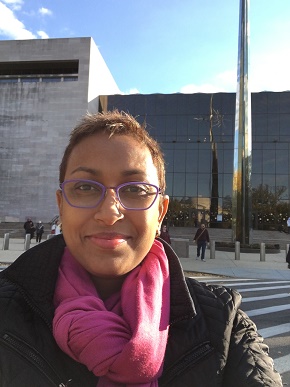
The Water Research Laboratory is led by Dr. Debbie-Ann Gordon-Smith, whose research expertise and leadership guide the laboratory’s scientific direction and engagement. The lab supports graduate training and research mentorship, currently three locally-based postgraduate students, Pearl Bergan, Andrew Green and Kadane Coates, as well as, undergraduate students and international researchers. Students are actively involved in fieldwork, laboratory analyses, data interpretation, and collaborative research initiatives, contributing to both local and international scientific outputs.
Collaborations
The Water Research Laboratory maintains strong international and regional collaborations that enhance research capacity and scientific impact. The lab participates in multi-institutional research projects with partners.
Local partners include the Water Resources Authority, National Irrigation Commission and various Non-governmental Organisations. International partners include the University of Texas and Georgia Institute of Technology in the USA, the Leibniz Centre for Tropical Marine Research in Germany, Liverpool John Moores University, University College of London and the Centre for Environment, Fisheries and Aquaculture Science in the UK. These collaborations facilitate knowledge exchange, shared methodologies, student training, and comparative studies across diverse aquatic systems. Through these partnerships, the laboratory contributes to globally relevant research while addressing regionally specific challenges in Caribbean marine and freshwater environments.